Community Design · Philadelphia

16th Street
Courts & Schoolyard

Restoring a legendary North Philadelphia basketball site through years of community co-design, visioning, and relentless advocacy — from vacant lot to vibrant schoolyard.

Client Big SandBox / North Philadelphia Community
Partners Sheller Foundation · Office of the Mayor
Outcome $1.6M raised · Courts delivered

Reimagine a legendary site. Rebuild community trust.

The 16th Street Courts at Tanner G. Duckrey School sit at one of North Philadelphia's most storied intersections — a site that shaped NBA careers and served generations of young people. After years of disinvestment, the courts had fallen into disrepair, and the community faced a "culture of no" from institutions that had repeatedly promised and failed to deliver.

As The Big SandBox Director of Innovation Strategy, the design strategy for a multi-year process was never just about courts. The project had a clear dual intent: restore a neighborhood legacy of leadership, and build a genuine community asset for future generations. Everything — the brand, the mural design, the co-design sessions, the engagement strategy — was built around four pillars: Family. Education. Legacy. Grind.

From the first Paint 4 Play activation in 2016, when 200 parents and students came out to paint the asphalt themselves, to the ribbon cutting in 2024, the design work held the community's vision alive through setbacks, a pandemic, and years of fundraising.

Design Strategy Community Co-Design Visioning Facilitation Branding Engagement Strategy

Location

16th & Susquehanna Ave, North Philadelphia — Tanner G. Duckrey School. A corridor that produced Hall of Fame talent and defined street basketball culture in the city.

The Challenge

Decades of broken promises had eroded trust. The community needed a process that was genuinely participatory — not performative — and resilient enough to survive COVID setbacks and funding gaps.

Scope

Design strategy sessions · Visioning workshops · Co-design for mural arts, built environment & branding · Community engagement events during funding pause · Partnership facilitation

Four Brand Pillars
01 Family

The courts as a gathering place — for neighbours, for generations, for the community that has always been here.

02 Education

Sport as a vehicle for learning, discipline, and connection to opportunity — not just for youth, but for the whole neighbourhood.

03 Legacy

Honouring what 16th & Susquehanna has always meant — and restoring it for the players who will come next.

04 Grind

North Philadelphia's defining spirit — the work ethic that produced Hall of Famers and kept advocates fighting for a decade.

From asphalt paint to ribbon cutting

2015
Stakeholder Group Inception

Community coalition forms to provide school access to the courts and begin planning a unified campus vision. The Big SandBox joins as backbone support for site design and fundraising.

July 2016
Paint 4 Play

200 parents and students come out to paint the asphalt themselves — a first act of reclamation. Fundraising begins. The community makes clear: this is theirs.

2016–2018
Master Plan + Phase 1 Dedication

A unified campus master plan takes shape. The City gifts $300K. Phase 1 renovation of the schoolyard begins. Design strategy sessions establish the four pillars that will anchor everything that follows.

June 2019
Phase 2 Launch — RACP Funding Secured

Regional capital funding secured. Match fundraising campaign launches. The 16th Street brand launches publicly — identity, mural concept, and community programming model co-developed with local artists Amber Arts.

2020–2021
Pandemic Pause — Sustained Engagement

COVID stalls construction and funding momentum. Community engagement continues. Soccer pitch construction begins. Phase 1 complete. The community vision, documented through years of co-design, keeps the project alive.

2022
Public Campaign + Final Fundraising Push

City-wide campaign launches showcasing the mission and model. Cross-sector partnerships with the Office of the Mayor, Sheller Foundation, and federal/state funders bring the total raised to $1.6M. Groundbreaking confirmed.

2024
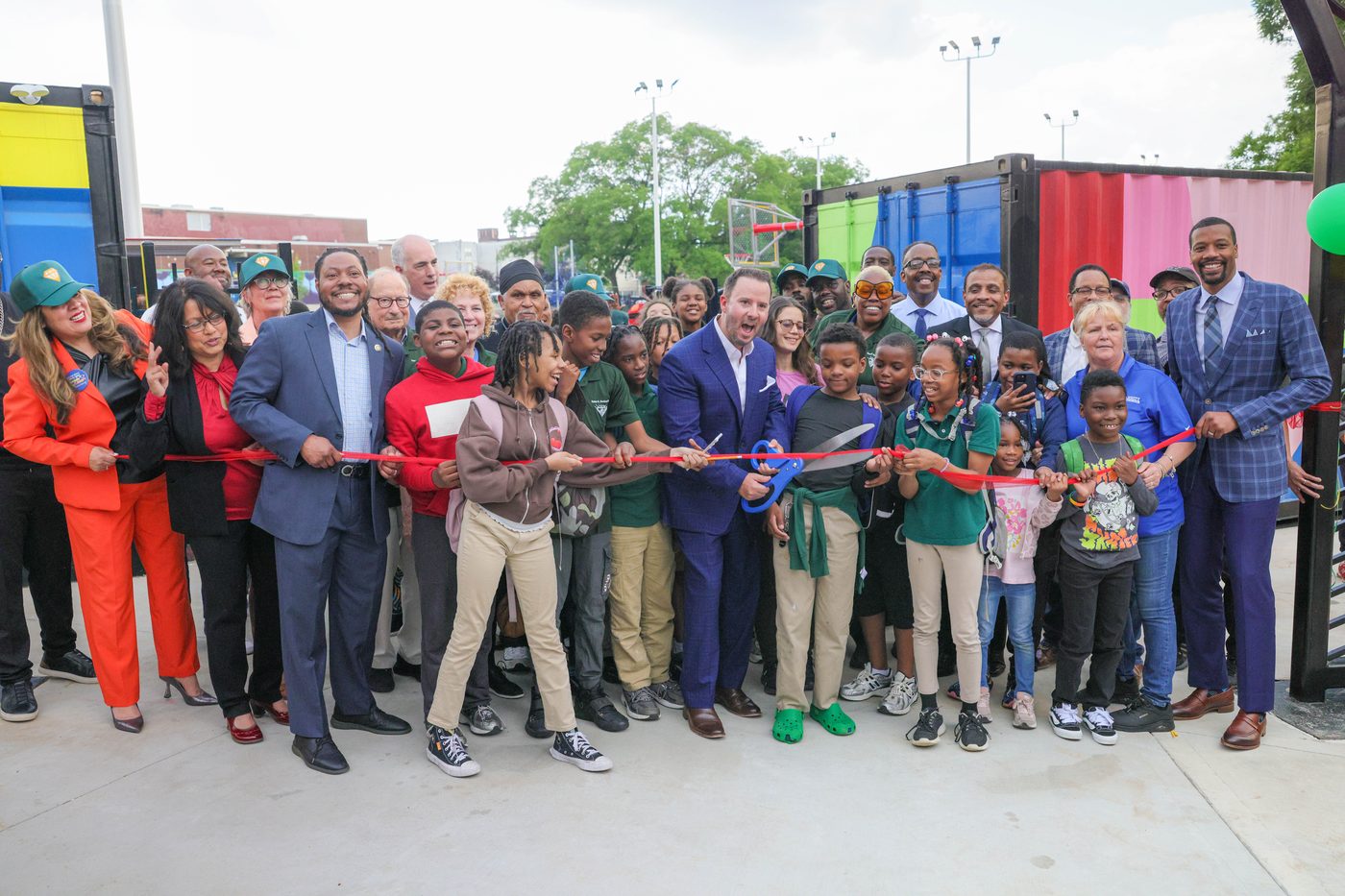
Ribbon Cutting — 16th Street Courts Open

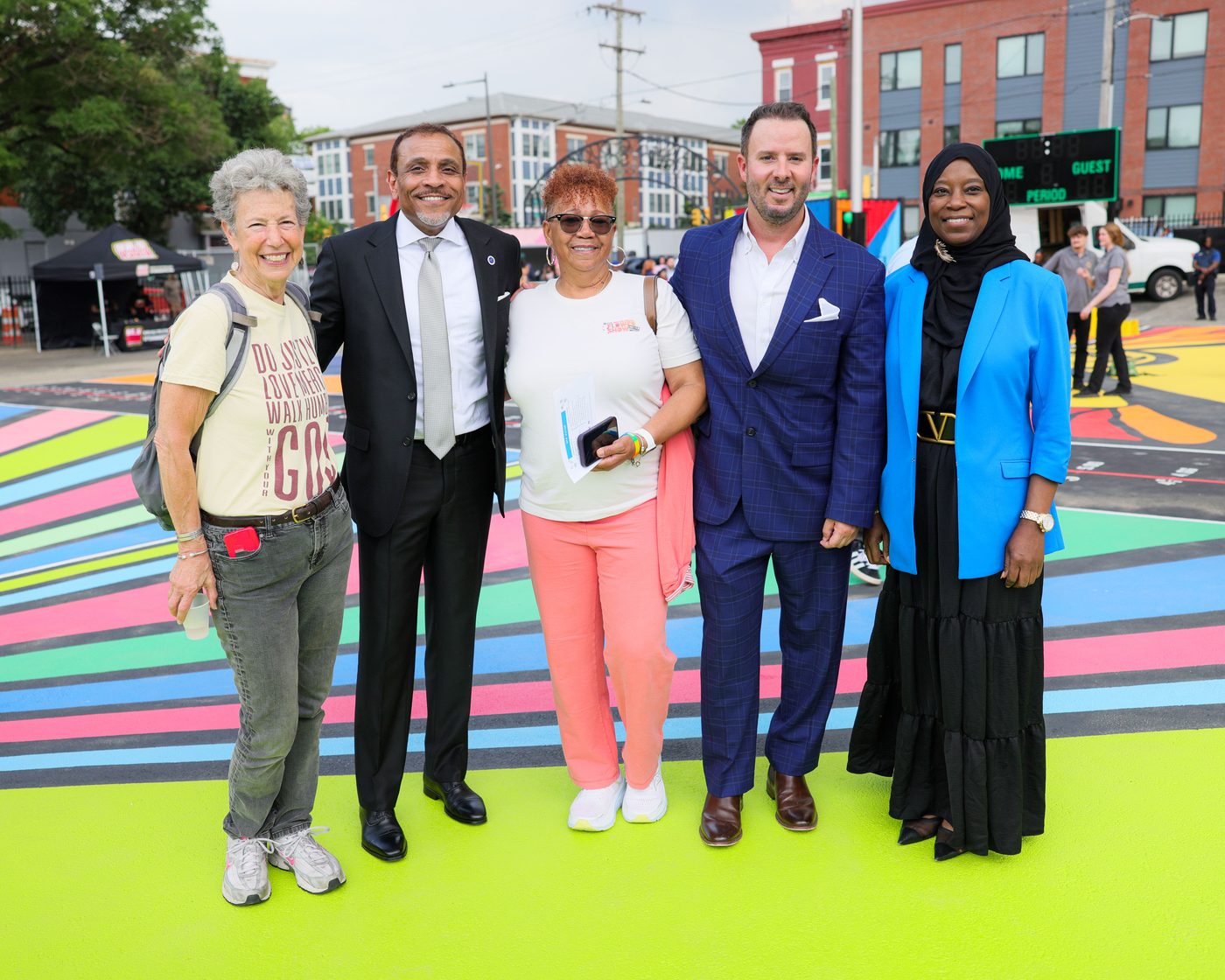
Hundreds of North Philadelphia residents gather. Superintendent Watlington Sr. and former Councilmember Darrell Clarke attend. Mural courts, running track, soccer field, scoreboard, playground, and fitness area — all open, all theirs.

Built to last — a three-org model

One of the strategic design outputs was a governance and operational model ensuring the courts wouldn't just be built — they'd be sustained. Three organizations, three distinct functions, one shared mission.

Operations & Programming

M3 Ideas

Leads on 16th Street programming, operations, and day-to-day management — keeping the courts active and the mission alive beyond the build.

Facilities & Licensing

School District of Philadelphia

Licenses use of the courts to M3 Ideas for programming. Ensures upkeep and maintenance of the premises as a school district asset.

Design & Fundraising Backbone

The Big SandBox

Non-profit backbone support for site design, construction improvements, and fundraising — the connective tissue that made cross-sector coordination possible.

Where legends learned the game

16th & Susquehanna isn't just a corner — it's a pillar of Philadelphia basketball mythology. Hank Gathers and Lionel Simmons, both Hall of Famers, grew up playing on these courts. For decades, players from across the city came to test themselves here. The courts were the Mecca of North Philadelphia street ball.

By the time the restoration effort began, that legacy was buried under years of disinvestment. The physical space had deteriorated. But the cultural memory — and the community's fierce attachment to it — had not.

The task wasn't just to rebuild courts. It was to honor what had always been there and create something worthy of it.
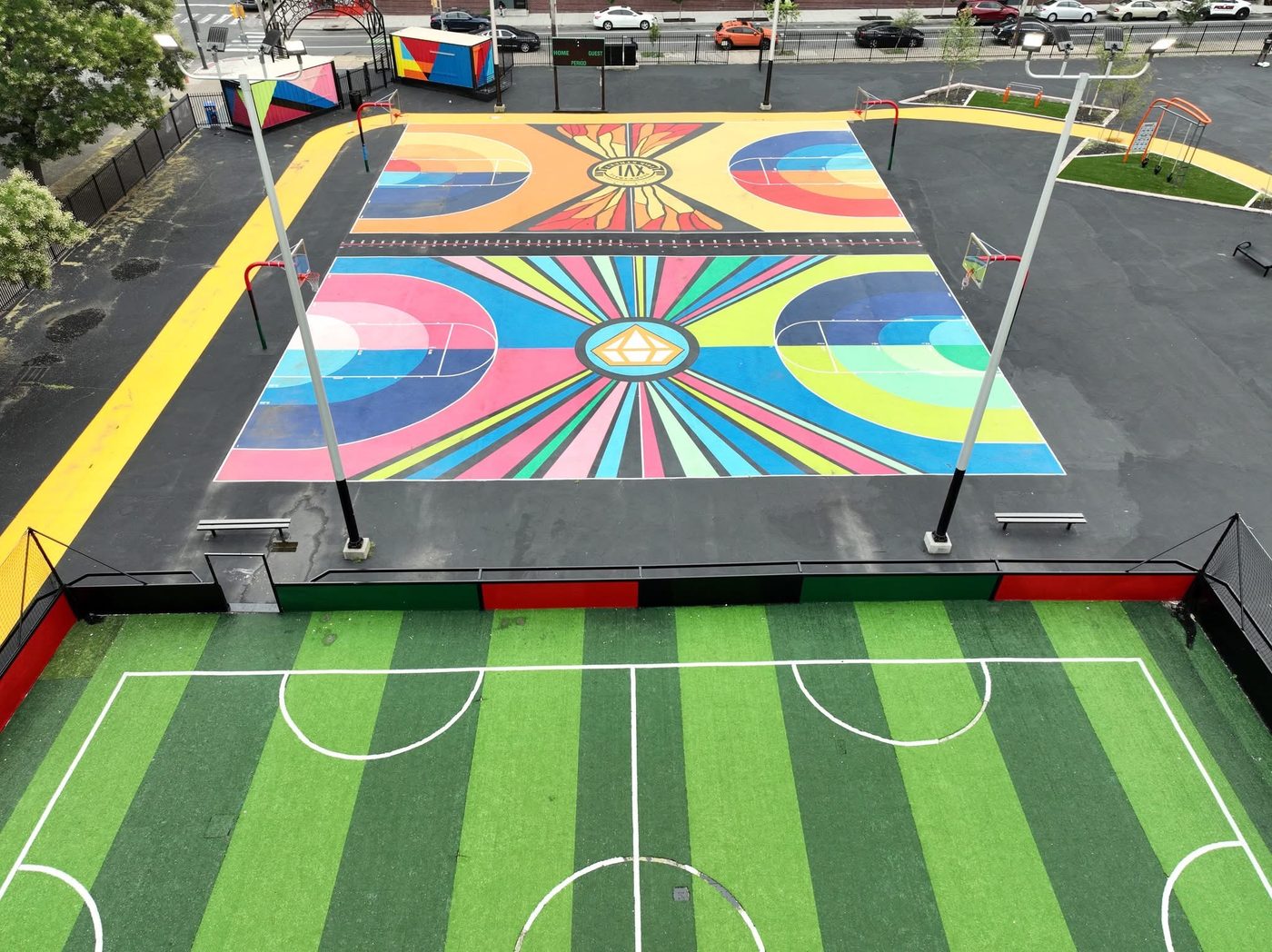
16th Street Courts — mural courts ground level
Completed mural courts, 2024
"The community had been told no for so long. Our job was to build something that could hold their vision — and survive the wait."
Kate Gaffigan — Design Strategist

Co-design as a long game

Design strategy here meant building the conditions for co-ownership — not just collecting community input, but ensuring that the community's vision shaped every layer of the project, from the mural arts to the brand identity to the physical layout.

01 — Foundation

Design Strategy & Brand Development

Developed the strategic brand framework anchored in four pillars — Family, Education, Legacy, Grind — that gave the project a coherent identity and a north star for every design decision that followed.

Pillar development Values mapping Brand identity
02 — Activation

Community Engagement & Visioning

From Paint 4 Play — 200 parents and students painting asphalt together in 2016 — to multi-year design sessions, the engagement strategy made participation visible and built the documented community vision that would move funders.

Paint 4 Play Visioning workshops Stakeholder coalition
03 — Co-Creation

Mural Arts & Built Environment

Co-designed the court mural aesthetic with local artists Amber Arts — weaving the four pillars into a visual pattern inspired by the possibility and power of transformation. The courts became a canvas for the community's own story.

Amber Arts collaboration Mural court design Built environment strategy
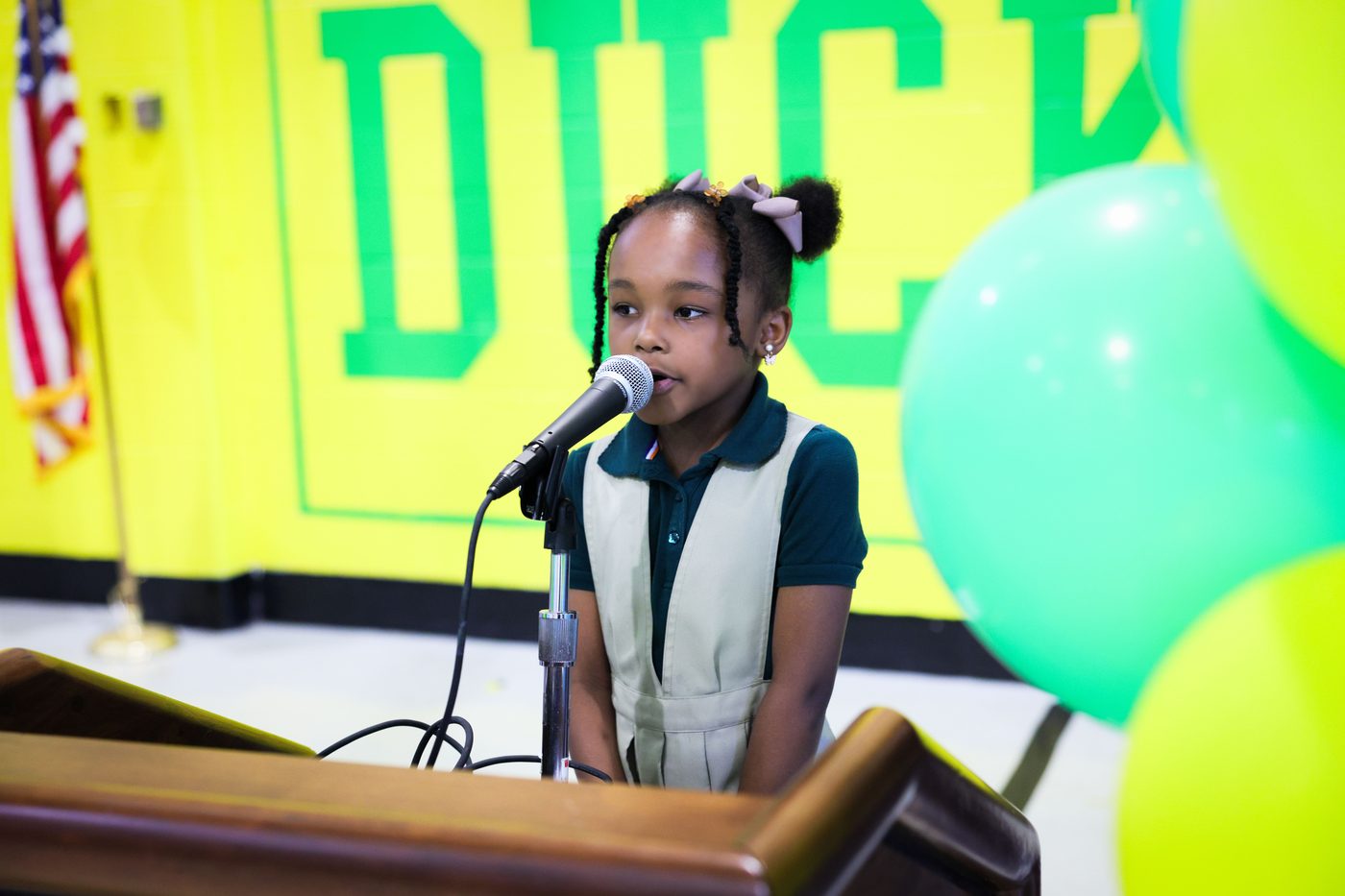
Ribbon cutting — community celebration at 16th Street Courts
Dedication ceremony, 2024
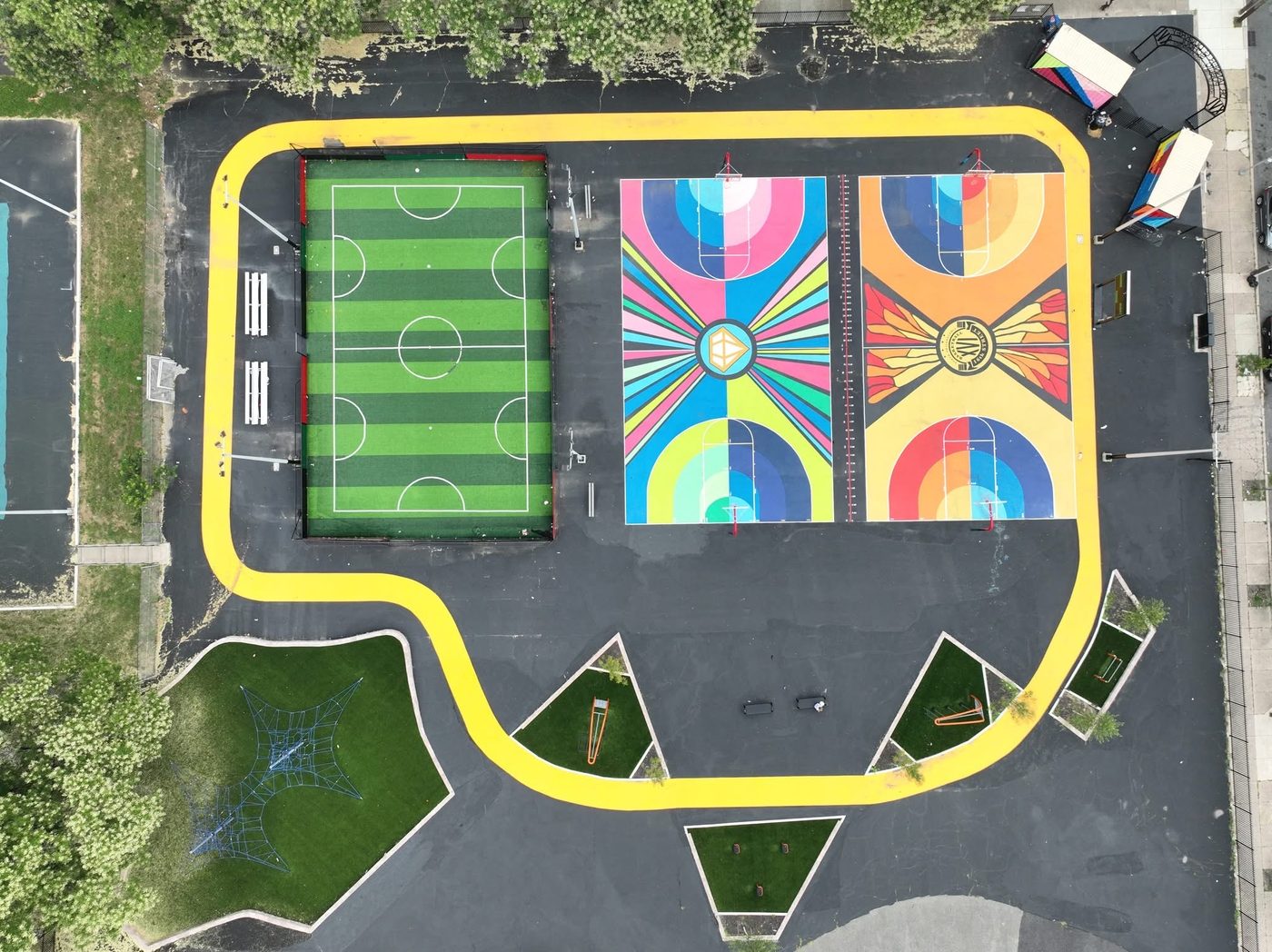
Aerial view — 16th Street Courts and Tanner G. Duckrey Schoolyard
Completed site — aerial view

The moment the community had been waiting for

After years of advocacy, design work, funding battles, and a global pandemic — the ribbon cutting at 16th Street Courts was a genuine community celebration. Hundreds of North Philadelphia residents showed up. This is what that looked like.

The video captures what no deliverable can: the energy of a community that fought for something and actually got it.

16th Street Courts — Dedication Recap

From vision to ground

After years of advocacy, co-design, and relationship-building — including sustained community engagement through a COVID-era funding pause — the project secured cross-sector investment and broke ground. The completed site is a genuine community asset: vibrant, functional, and unmistakably theirs.

$1.6M
Raised through city, state, federal, and philanthropic funding streams
Mecca
A legendary North Philadelphia site — restored to its place in the community's story
Open
Community-first access model — courts kept open for all, not fenced behind programming
Co-owned
Community voice embedded in every layer — from the mural art to the brand identity to the programming vision
Vibrant Mural Courts
Custom-designed basketball courts with community-co-created mural aesthetics — visually striking and culturally specific
Full Athletic Complex
Soccer/futsal field, yellow running track, playground, fitness equipment, and electronic scoreboard completing the vision
Tanner G. Duckrey Schoolyard
The broader schoolyard transformation — a shared green infrastructure win for student health, heat reduction, and community gathering
Courts and Schoolyard
The full site — courts and schoolyard — delivered and open to the community
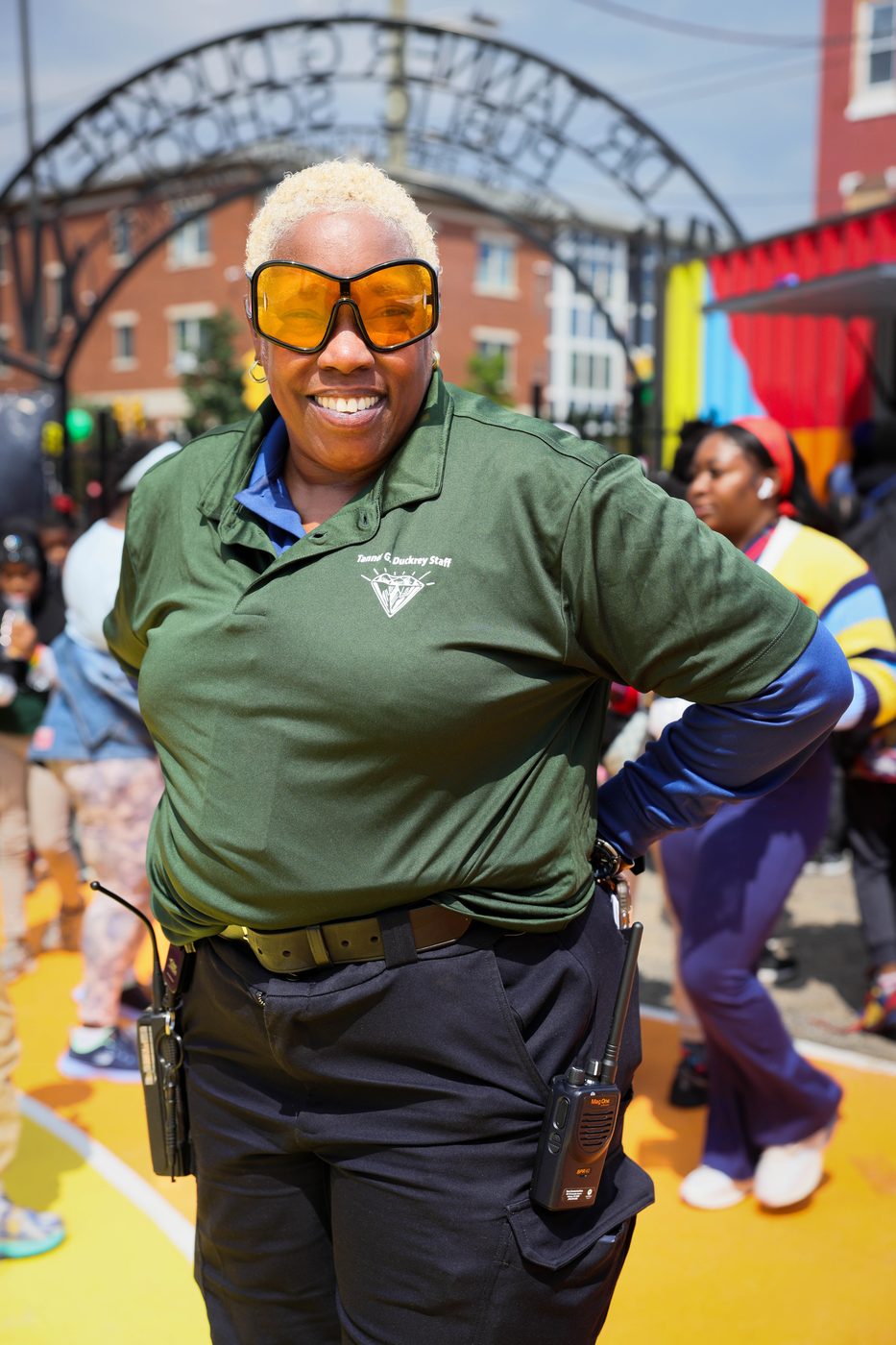
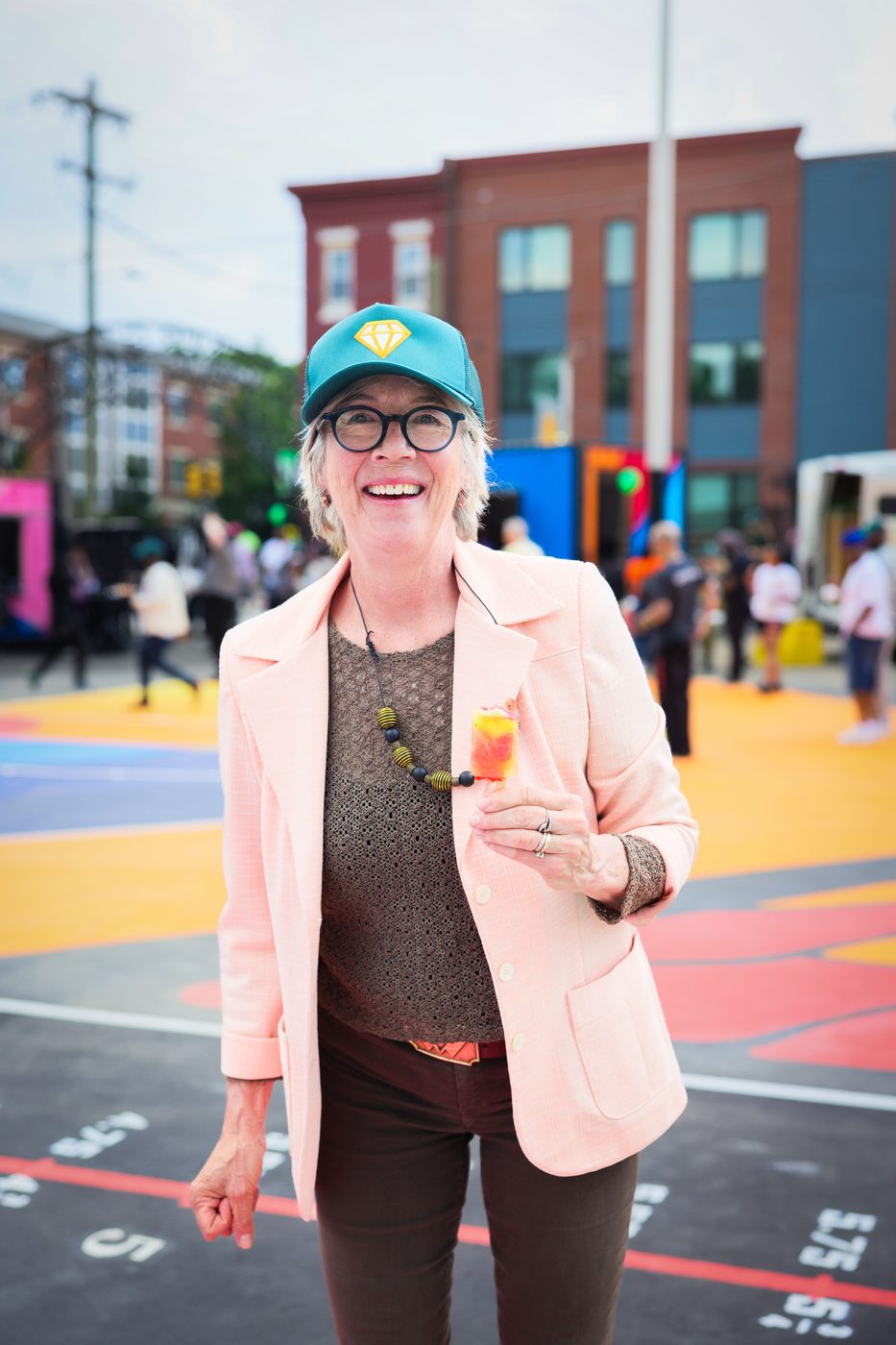
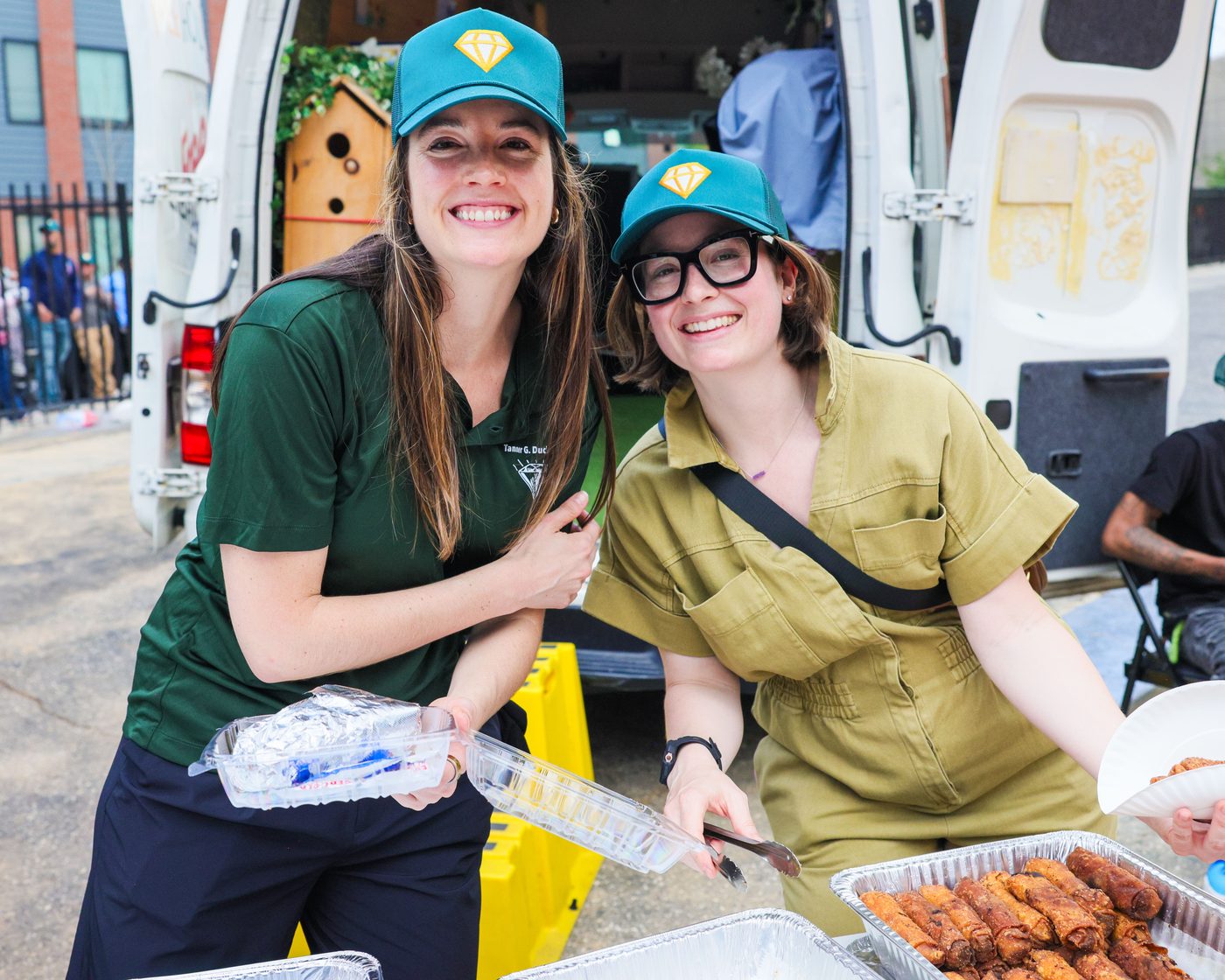
Community member at dedication day Community member celebrating on the courts Community advocates on the courts Team members at the dedication celebration Community partners and advocates

Community advocates made this happen. Design held the space open for them.

Danita Bates and Brite Alexander — North Philadelphia residents — spent years refusing to let the promise of these courts die. When funding stalled, when institutions dragged their feet, when COVID shut everything down, they kept showing up.

The design strategy's job was to create a container strong enough to hold that persistence: processes that produced real documentation, real community vision artifacts, and a coherent case that could move funders and City officials toward yes.

When Superintendent Tony Watlington Sr. and former Councilmember Darrell Clarke showed up for the ribbon cutting in front of hundreds of North Philadelphia residents, it was the culmination of a process that had never once lost sight of who this was for.

Partners

City of Philadelphia State of Pennsylvania The Sheller Foundation

On community-centred design in the long run

Most design projects have a defined beginning and end. Community infrastructure work doesn't always get that luxury. This project required showing up — again and again — in ways that looked more like advocacy than conventional design practice: building relationships, maintaining momentum, and keeping a community's vision legible to institutions operating at a different speed.

What I took from this: the design artifacts — the vision documents, the co-design outputs, the brand language — weren't just deliverables. They were a form of institutional memory. They gave the community something to point to and say: this is what we said we wanted, and we still want it. That persistence is what eventually moved the needle.

← Previous Toronto Resilience Strategy All Work Next → Speculative Innovation Challenge